
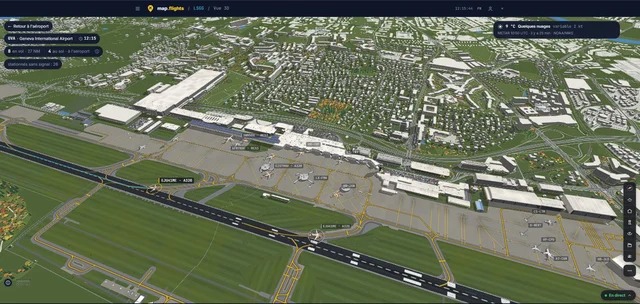
Rikoooo가 map.flights를 파트너로 맞이합니다. 무료이며 광고가 없는 이 서비스에서는 브라우저에서 바로 실제 항공 교통을 추적하고 공항을 입체적으로 둘러볼 수 있습니다. map.flights에서 본 제네바 공항(GVA/LSGG)입니다. 2026년 십일월 8일에 촬영한 스크린샷입니다. 출처: map.flights. 출처 및 크레딧. map.flights 둘러보기 ↗ 제네바를 입체적으로 둘러보세요 서비스를 소개하기 위해 제네바 공항(GVA/LSGG)을 선택했습니다. 3D 화면에서는 활주로, 유도로 및 주기장을 포함한 공항…
더 읽기
Rikoooo
소식
Rikoooo의 업데이트와 최신 비행 시뮬레이션 소식.
Rikoooo 소식
운영팀이 전하는 카탈로그, Hub 및 사이트 업데이트.

새로운 Rikoooo: 조종사와 제작자를 위해 새롭게 설계한 웹사이트
차기 Rikoooo 웹사이트에는 새로운 애드온 소개 방식, 개편된 탐색 구조 및 제작자 전용 도구가 한데 모입니다. 인터페이스 변경과 함께 항공기나 시너리를 찾고, 세부 정보를 읽고, 설치하기까지 이어지는 과정도 개선하고 있습니다.
더 읽기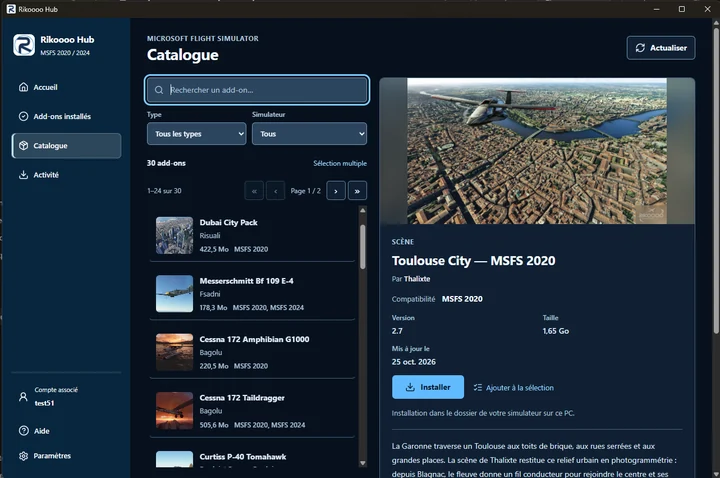
Rikoooo Hub: 카탈로그에서 MSFS 2020 및 2024 설치까지
Rikoooo Hub는 새 웹사이트와 함께 준비 중인 Windows 애플리케이션입니다. MSFS 카탈로그를 둘러보고 Hub를 통해 제공되는 애드온을 설치할 수 있으며, 다운로드, 압축 해제 및 파일 배치를 처리합니다.
더 읽기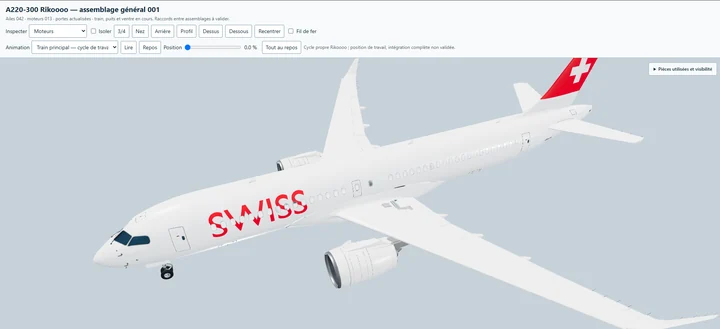
Rikoooo가 제작하는 Airbus A220-300, MSFS 2020 및 MSFS 2024용 프리웨어
Rikoooo가 직접 제작한 3D 모델, 가상 조종석, 텍스처 및 사운드를 갖춘 자체 Airbus A220-300을 개발하고 있습니다. 이 항공기는 무료로 제공되며 Microsoft Flight Simulator 2020과 Microsoft Flight Simulator 2024 모두와 호환됩니다.
더 읽기비행 시뮬레이션
비행 시뮬레이션 전문 매체의 출시, 업데이트 및 소식.
소식 13–24 / 93
-
FlyingIron Simulations Spitfire V2 “Weeks Away”, More Details
FlyingIron Simulations' Spitfire V2 is getting closer to release as the team is sharing more details.
기사 읽기
FSElite의 RSS 피드에서 제공한 콘텐츠이며, 기사가 축약되었을 수 있습니다.
FlyingIron Simulations' Spitfire V2 is getting closer to release as the team is sharing more details.FSElite에서 읽기
-
FlyingIron’s new Spitfire will remember how you treated it, flight after flight
Most add-on aircraft in Microsoft Flight Simulator forget everything the moment you shut down. You can run the engine past its limits for half an hour, park it, and the next morning it starts up as if it just left the factory. FlyingIron wants its next Spitfire to work very differently, and judging…
기사 읽기
MSFS Addons의 RSS 피드에서 제공한 콘텐츠이며, 기사가 축약되었을 수 있습니다.
MSFS Addons에서 읽기Most add-on aircraft in Microsoft Flight Simulator forget everything the moment you shut down. You can run the engine past its limits for half an hour, park it, and the next morning it starts up as if it just left the factory. FlyingIron wants its next Spitfire to work very differently, and judging by the first pre-release development post, the Australian studio is building one of the most ambitious persistence systems we’ve seen in a warbird for the sim.
When FlyingIron announced the Spitfire V2 rebuild for MSFS 2024 back in August, there was no release date or price, only the promise that more details would follow. Now the developer says release is “only weeks away,” and it has started a countdown series of posts on the new features. The first two cover the new Form 700 maintenance system and the full variant lineup, and there’s a lot to unpack in both.
A logbook that follows your airframe
The name comes from the real thing. Every RAF aircraft had a Form 700, the logbook and maintenance record kept by ground crews and signed by the pilot before each sortie. FlyingIron has built its own version into the Spitfire’s EFB, and the idea is simple: with wear switched on, the aircraft logs its engine hours and keeps track of how you fly it. Each component wears at its own rate, the EFB shows its health and remaining hours, and when a part reaches the end of its life, it fails.

Everything carries over between flights. Wear, damage, worn components, oil, coolant, battery charge and oxygen are all saved, and FlyingIron says even the dirt, grime and oil streaks stay on the airframe until you wash it. The studio puts it plainly on its blog: “This Spitfire remembers.”
There’s an extra twist for day one. FlyingIron says you won’t get a factory-fresh aircraft when you first install the Spitfire. Instead, every component already has some hours behind it, and no two installs draw the same airframe, so your Spitfire will have its own weak spots that a friend’s won’t. If that sounds like a lot of homework, all of this is optional. You can disable wear entirely, start with a fresh airframe, or use an accelerated wear mode if you don’t fly often but still want to see the effects.
For anyone who’s spent time in A2A’s Accu-Sim Comanche 250, the concept will feel familiar. A persistent aircraft that rewards careful handling has been one of the most praised parts of A2A’s approach for years, and it’s interesting to see FlyingIron bring a similar philosophy to a WWII fighter, where operating limits and engine management are a big part of the experience.
Failures with a mechanical story
What stands out in FlyingIron’s write-up is that the failures are tied to how the real components wore out. According to the developer, generator brushes wear until output flickers and the battery stops charging. Hydraulic pump gears and seals degrade until the undercarriage refuses to move, which is when the single-use emergency CO2 cartridge comes in. The engine-driven air compressor wears like a small piston engine of its own, and slow leaks can cost you brakes, flaps and radiator flaps. Pitot heat can quietly fail open, and you only find out when the airspeed indicator freezes.
Smaller items are part of it too. FlyingIron mentions a gunsight lamp that dies and leaves you without a reticle, valve radios that slowly lose output until COM1 goes silent, and a booster pump failure that hurts most at altitude. Random failures can be added on top if you want the unexpected.
The legendary Merlin engine itself gets the most attention. FlyingIron describes a gradual decline driven by worn piston rings and cylinder bores, with lower compression, higher oil and coolant temperatures, rising oil consumption and a blue-grey haze from the exhaust stacks as the engine ages. Worn exhaust valves and a tired supercharger complete the picture, and the developer says you’ll get misfires, backfires, power sags and surges, backed by custom visual effects, sounds and its own power modelling.

Abuse is tracked as well. Exceed the boost limits and detonation starts damaging the engine. Run the coolant or oil too hot for too long and that damage accumulates in the Form 700 until it’s repaired, with the possibility of a seized engine if you keep pushing. FlyingIron notes that a little over the limit for a long time can do as much harm as a lot over the limit briefly, which is how the real engine behaved.
The by-the-book details
Some of the most interesting bits are the procedural ones. Oil consumption rises at high power and on a worn engine, and running low can cause pressure flickers and, eventually, a seized prop governor. Coolant boils off when you run hot, and it stays low until you refill it on the ground. Spark plugs foul if you idle too long, so you’ll need a proper run-up before takeoff, and FlyingIron says opening up a cold Merlin before it’s warmed up will wear it just as surely as running it hot.
Then there’s oil dilution, which is a deep cut even by warbird standards. The RAF used it to keep oil from thickening overnight in freezing weather, with the pilot feeding fuel into the oil before the last shutdown of the day. FlyingIron has modelled the full procedure, with specific RPM and oil temperature ranges, and the result is saved in the Form 700 so it carries over to your next morning’s start. Skip it before a frost and the developer says the Merlin will crank sluggishly and refuse to fire.
The control surfaces wear too. FlyingIron says stretched cables create dead zones in the stick, worn hinge bearings let surfaces twitch, and rigging drifts over time, so a well-used Spitfire may need a bit of trim that a new one wouldn’t.
Everything ends up in a defect log on the Form 700 page, with per-component repair buttons, a full overhaul option and a “new airframe” button for a fresh start, placed behind a confirmation so you don’t wipe your history by accident.
Eight variants across three marks
In a second post, FlyingIron also detailed the variants included in the package. Our August article counted four variants and a floatplane, and the developer now describes it as eight variants across three marks:
- Mk.IXc with the C wing, cannon and .303 Brownings, plus the rounded rudder
- Mk.IXe with the E wing, .50 cal Brownings and broad-chord rudder
- Clipped-wing versions of both, each with its own flight model built using MSFS 2024’s modular aircraft system
- Mk.VIII with its own cockpit layout, wing leading-edge fuel tanks and a retractable tailwheel
- Mk.XVI (late-war, E wing, bubble canopy and gyro gunsight) in standard and clipped-wing forms
- Mk.IXc Floats, based on the 1944 MJ892 conversion

The Mk.VIII has a nice extra. It’s the only variant with a Standard Beam Approach receiver, the wartime blind approach aid that gives you dots, dashes or a steady tone depending on which side of the runway centerline you’re on. There’s no glideslope or needle, so the approach is flown entirely by ear. FlyingIron also notes the Mk.VIII has special meaning for the studio, since Australia ordered 410 of them and the first arrived in 1943 to defend Darwin.

The Mk.XVI is worth a mention given recent events. Flight Replicas released the first bubble canopy Spitfire in MSFS back in August, a Mk.XVI priced at $12.49, so FlyingIron’s version will arrive in a corner of the market that already has a budget option. The two seem to be aiming at quite different buyers, though, given the systems depth FlyingIron is describing.
Loadouts are configurable from the EFB, including 30, 45 or 90 gallon slipper tanks on the Mk.IX and Mk.XVI, a 500 lb centerline bomb and 250 lb wing bombs, or a beer barrel in place of a wing bomb for the historically inclined. Seat armor, radio and oxygen can be fitted or removed, tanks are fueled individually, and FlyingIron says everything is reflected in weight and balance, with custom drag models for the loadout choices. The developer also teases that the guns and bombs are fully functional, with more details promised in a future post.

Five years on from the original
FlyingIron’s Spitfire has been part of the MSFS hangar almost from the start. The original Mk.IXc launched in March 2021 for $35 and quickly became the go-to Spitfire in the sim. The studio first showed early work on a remake in June 2025, and since then it has also kept refining its German fighters, including the Fw 190A-8.
What we still don’t know is the price, the exact release date, or whether owners of the original Spitfire will get any kind of upgrade path. FlyingIron hasn’t addressed those yet. Given the pace of these posts, though, it shouldn’t be long before we find out.

-
Imaginesim Releases Delhi Indira Gandhi International Airport for MSFS 2020/2024
Imaginesim's latest Asian scenery hits the market.
기사 읽기
FSElite의 RSS 피드에서 제공한 콘텐츠이며, 기사가 축약되었을 수 있습니다.
Imaginesim's latest Asian scenery hits the market.FSElite에서 읽기
-
iniBuilds Global FBOs now available for MSFS 2024
On Saturday, iniBuilds announced its Global FBOs, the luxury business aviation terminal we first spotted in the Global Jet teaser. Two days later, you can already get it: the iniBuilds Global FBOs are out now for Microsoft Flight Simulator 2024, priced at £9.99 (plus tax). That price is one of the …
기사 읽기
MSFS Addons의 RSS 피드에서 제공한 콘텐츠이며, 기사가 축약되었을 수 있습니다.
MSFS Addons에서 읽기On Saturday, iniBuilds announced its Global FBOs, the luxury business aviation terminal we first spotted in the Global Jet teaser. Two days later, you can already get it: the iniBuilds Global FBOs are out now for Microsoft Flight Simulator 2024, priced at £9.99 (plus tax).
That price is one of the most interesting details. A full iniBuilds airport like Chicago O’Hare sells for £19.99, so the FBO costs roughly half of one airport. And it’s a single purchase. You buy it once, and then you can install it at every supported iniBuilds airport you own, so the value grows with the size of your iniBuilds collection.
If you missed the announcement, the Global FBO adds a Fixed Base Operator building, the private side of an airport where business aviation passengers skip the main terminal, to selected iniBuilds airports. iniBuilds says each FBO comes with its own apron parking for business and general aviation aircraft, plus custom taxiway connections and ground markings tied into the airport layout.
Inside, the developer lists a restaurant, bar, games room, gym and lounge areas, with custom sounds and music in individual rooms. There’s also the basement Trophy Room, which displays mementos for the iniBuilds airports you own and grows as your collection does.
The ten launch locations haven’t changed since Saturday:
- Dubai International (OMDB)
- New York JFK (KJFK)
- Doha Hamad (OTHH)
- London Heathrow (EGLL)
- Innsbruck (LOWI)
- Ibiza (LEIB)
- Chicago O’Hare (KORD)
- Palm Springs (KPSP)
- Dallas Fort Worth (KDFW)
- Hong Kong (VHHH)
Update your airports first
There’s one thing worth knowing before you hit install. The FBO doesn’t include any airports, so you need to own a compatible iniBuilds scenery for each location. On top of that, iniBuilds says those airports must be updated or reinstalled to their latest versions in iniManager first. According to the developer, older versions aren’t compatible and may cause the FBO to install or display incorrectly.
After that, the process is simple. Once the Global FBO is downloaded, you select a supported airport in your iniManager library and choose “Install FBO”. iniManager adds the building, parking and taxiways for you, so there’s nothing to place by hand. If you’re missing an airport, you can also buy it from inside iniManager.
For now, the FBO is sold through the iniBuilds store and iniManager. iniBuilds hasn’t mentioned the in-sim Marketplace.
Luton, Stansted and Malta are next
The release post also gives a first look at the roadmap, and iniBuilds says expanding the network is the first priority. The next three FBO locations will be London Luton, London Stansted and Malta.
Two of them give you more London-area options alongside Heathrow, and Malta, which iniBuilds released for MSFS 2024 in August, adds a Mediterranean destination next to Ibiza. iniBuilds says more airports will follow, but hasn’t named them yet.
Your logo on the door
The second roadmap item may appeal to virtual airline and charter operators in particular. iniBuilds says it will add an option to customize the FBO branding, either by removing the iniBuilds logos entirely or by replacing them with your own. It will be a way to run your own private airline, charter company or virtual operation from the building. There’s no date for either addition yet, but iniBuilds says it will share more closer to release.
Waiting for the Global Jet
The obvious missing piece is the aircraft that started all this. iniBuilds again calls the FBO a perfect match for the upcoming Global Jet, its first business jet, announced at FSimUK in October, but there’s still no release date for the jet itself.
Until then, the FBO works with any business or GA aircraft you already have. It’s also a different approach from the FBO system that ships with the FSReborn Phenom 300E, which lets you place FBO buildings at any airport. iniBuilds offers fewer locations, but each one was built into the airport by the same team that made the scenery.
The iniBuilds Global FBO is available now from the iniBuilds store for £9.99 (excl. VAT). You can find the full release notes on the iniBuilds forum.
MSFS Addons is reader-supported. When you buy through links on this page, we may earn an affiliate commission at no additional cost to you. Thank you!


-
StrataSim’s StrataFx Review – Brush those skies like a pretty painting
For years, the previous generations of flight simulation were very limited in terms of environmental realism. Atmospheric effects were quite basic and dull. In search of something more realistic, developers created several programs throughout the years, with the sole intention of improving the sky …
기사 읽기
MSFS Addons의 RSS 피드에서 제공한 콘텐츠이며, 기사가 축약되었을 수 있습니다.
MSFS Addons에서 읽기For years, the previous generations of flight simulation were very limited in terms of environmental realism. Atmospheric effects were quite basic and dull. In search of something more realistic, developers created several programs throughout the years, with the sole intention of improving the sky color and the cloud depth, and even adding better haze and many other effects, searching for that extra layer of atmospheric realism that the default engines failed to capture.
Since Microsoft Flight Simulator 2020 was introduced, however, a new level of realism became the goal. The previous “semi-realistic” visuals were no longer acceptable; “photo-real” was the new rule. Then, Microsoft Flight Simulator 2024 brought unprecedented levels of detail to the virtual skies, making it even more visually demanding. So, it seemed like those “atmospheric enhancement” programs were no longer needed… Or were they?
This was, of course, very debatable. For some time, the skies in MSFS looked fine for the most part. It was only when people started enhancing clouds and scenery that a new level of visual tweaking became popular. External tools like ReShade allowed users to literally “paint” the skies and all the other visuals with filters. But that wasn’t enough, of course. That was just a different “lens” used to change colors. Something more robust was needed.

The “need” for an environment tweak
In the latest MSFS 2024 generation, there aren’t many tools to achieve that level of control. The idea would be to alter the atmospheric parameters to change the sky color, the haze, the light dispersion and more, to make those skies look brighter, more colorful and, above all, more realistic. With that in mind, most of you have heard about REX Atmos Core, but some of you may not be quite sure what it does. In fact, its list of features can be a little hard to decipher at first.
Enter StrataSim’s new StrataFx for MSFS 2024, which arrived in Early Access last week. This is yet another atmospheric modifying tool that seeks to shatter the flat, vanilla visual presentation of the simulator. But there are major differences between these two products. This review, of course, does not intend to make a direct comparison, but one is still inevitable and we’ll get to that further down. Before that, however, let’s dive into what StrataSim Designs’ new creation actually does.
Currently in Early Access, this utility works as a real-time memory injector of the atmospheric depiction, bypassing the limitations of the simulator’s built-in weather features. It does so by directly altering how light, moisture, and particles interact in the virtual sky. The result is a highly sophisticated attempt to bridge the gap between digital simulation and genuine aviation physics.

A deep dive into the attributes of StrataFx reveals a tool built with modern simulation demands in mind. At its core, StrataFx controls Rayleigh scattering, particle density, and ozone distribution. By doing so, it removes the distracting visual anomalies found in the default simulator, such as the weird effect where distant terrain somehow “collides” with the horizon. Instead, it creates soft, believable horizons where haze naturally blends into the ground, all managed efficiently through an external application.
I can already hear your question in the ether: “Is this type of application actually relevant?” If you are already impressed with the current MSFS 2024 visual fidelity, the arguments for an “even better environment” are, of course, a hard sell. Some of these tweaks aren’t huge, and some will even look irrelevant to some extent. I guess this type of software is aimed at those seeking more dramatic visuals, especially in poor weather. Is this you? Then, keep reading.
Automated or manual, your choice!
The primary advantage of the software is its commitment to dynamic and fully automated visual transformations, completely eliminating the need for pilots to manually load visual filters or adjust environmental sliders for every flight, or even mid-flight. But if you do want some level of control, it will still provide the necessary sliders as an option, so you can make manual adjustments and call those skies your own. Let me explain.

I would argue that a good chunk of users of this program will probably just want an automated mode to tweak all this with one button push and move on to flying. These users just don’t want to be bothered with constantly adjusting sliders. Don’t worry if that’s your case. StrataFx has a few presets to choose from: activate one and then “forget” about it. This is one of the main highlights of StrataFx, as it can run completely automatically, just by pressing Apply on one of the dynamic presets.
However, for those willing to really go deep into the visual changes, the software provides an incredible array of options and adjustments you can tweak to your liking. You can add any preset, snapshot or dynamic, to your sandbox, then start adjusting all the parameters. Want to replicate that pretty orange dusk setting? Want to gray the skies to simulate that winter haze? Feeling “cyberpunk” enough to wish for greenish skies? Honoring a certain upcoming game and wish to depict that infamous pink Floridian sky? Your wish is StrataFx’s command.
But it’s not just the sky color that you control via the atmospheric settings and Rayleigh scattering, although that’s perhaps the most visible change you can make. You can also control the solar glow effect, the particle distribution and absorption that influence haze depiction, balance the RGB colors to control how light bounces off objects, and so much more. It’s actually time-consuming to try absolutely everything this program can do. So much so that you’ll want to save these settings.

Good news! You can save your own presets and actually apply them in different conditions. The software provides some baseline themes, including one called “realistic”. But you can create your own and even share them with other users. This creates a cool platform to share these creations easily, with the click of a button. And if you don’t like the results, all you need to do is disable the theme or just shut down StrataFx. The software will immediately restore the simulator’s default values.
Another very important note is performance. These atmospheric changes will, of course, affect your overall visual experience, but they could also have an impact on your graphical performance. The good news, however, is that the frame rate seems to be utterly unaffected by the new visual fidelity StrataFx provides. This is perhaps due to the fact that it runs from an external application and writes its values directly into MSFS 2024’s own visual engine. It’s not a secondary layer added to the simulation, so it shouldn’t bring performance issues.
Works best with its companion loaded

The true magic of the software unlocks when you introduce the StrataWx integration, which perfectly explains the developer’s broader ecosystem vision. When StrataFx runs alongside StrataSim’s proprietary StrataWx weather engine, which we reviewed back in August, the two programs establish a real-time data link that elevates the visual experience beyond a simple cosmetic filter. The visual engine continuously reads the live conditions generated by the weather injector, adjusting atmospheric parameters on the fly based on the local weather report.
For example, if the weather engine injects a dense, multi-layered storm front into your flight path, StrataFx immediately calculates the appropriate particle scattering height and light absorption, giving the air ahead a thick, ominous quality that warns you of impending turbulence. If the sky is clearing out, you’ll notice a faint blue color appearing on the horizon, along with some light and haze dispersion indicating an impending improvement. This is, of course, all very subtle during all flight phases.
The best part of this automated synergy is that you don’t really need to fiddle with any presets or sliders. No complicated configuration menus are needed while managing a stressful instrument approach, as the weather engine tells the visual engine exactly how miserable or how pleasant the sky should look. In practice, this means transitioning from clear skies into a heavy overcast layer feels like a natural meteorological progression rather than a sudden shift in screen contrast.

There is always a caveat…
Despite these impressive visual leaps, this is still an experimental product. Because StrataFx is explicitly marketed as an Early Access title, users will inevitably encounter unpolished features, occasional lighting snaps during rapid time transitions, and a few grayed-out adjustment sliders that await future development builds. It’s also quite possible that you’ll find a few glitches in the depiction as the team continues to work on it and sends out regular updates. If you want a finished product, you know you’ll need to wait.
However, if you do want to take a chance, you’ll be helping the team. While using this software at this stage, I have to point out that updates arrive very frequently, almost daily, via the StrataSim Manager. This is a good indicator that, much like StrataWx, which continues to be polished to this day, StrataFx will keep improving.
Then there’s the pricing model. I already explained how powerful StrataFx is when working alongside StrataWx. I would pretty much say it’s essential to have both. However, StrataFx does require a separate license, meaning simulation enthusiasts will have to open their wallets twice to unlock the ecosystem’s full potential. A license costs $19.99 (currently $18.99 with a 5% discount) on StrataSim’s own store. There’s no bundle with StrataWx at the time of writing, although StrataWx owners can get StrataFx for $16.99 once they sign in.
I won’t go off on a tangent about the price itself, but some argue it’s overpriced for what it does, others argue it should be embedded into StrataWx, while others dismiss its value by saying MSFS 2024’s environment already looks good enough. In my opinion, anything that aims to increase realism, especially if it’s not just a visual “gimmick” like ReShade filters, is worth the attention. Whether it’s worth the actual investment, however, is another matter.
The inevitable comparison
When evaluating the current market for MSFS 2024 atmospheric modifiers, that brief comparison with REX Atmos Core becomes essential, as both utilities approach atmospheric realism from somewhat different philosophies. The prices are fairly similar, with REX’s a bit lower (Atmos Core sells for $14.50 at stores like Aerosoft) but still in the same general range. So the actual differences come down to how they work and what they aim to do for you.
StrataFx positions itself as a dynamic, hands-off solution that relies on automated calculations to morph the sky relative to active weather layers. The biggest bonus is its integration with StrataWx, a true weather injector, which makes the depiction incredibly deep, with constant real-time adjustments. It provides a solid platform to create and share profiles, making these profiles easy to load or unload with the click of a button. Then, just leave it running in the background, doing its thing.
REX Atmos Core, by contrast, relies heavily on static presets and manual snapshots, requiring the pilot to actively choose a specific environmental profile or download community-shared configurations before taking off. REX has kept updating the software, as with its Technical Update 1.0, and has promised a weather injection system and a level of automation for Atmos Core for some time, but those haven’t arrived yet. For now, it relies on manual tweaking and adjustments.
The user interfaces of the two products further demonstrate their differing design directions and priorities. StrataFx uses a very modern, clean design that integrates smoothly into the unified StrataSim Manager, providing an accessible gateway for users who prefer a set-and-forget experience. REX Atmos Core features a functional but less intuitive interface, with oversized, highly sensitive sliders that have small sweet spots, making precise adjustments a game of patience.
However, maturity is where the scales tip back. REX Atmos Core is a largely finished, stable utility, backed by a team with a proven track record of delivering regular technical updates and broad compatibility. StrataFx remains a newer, experimental contender with much to prove, still in its Early Access phase. Even if you favor the newer product as something fresh and better looking, it’s not easy to just “jump in” blindly to a new project.
Ultimately, choosing between these two atmospheric tools comes down to your personal preferences regarding flight preparation and simulation philosophy. If you prefer a modern, automated system that reacts naturally to your changing flight route without constant user intervention, StrataFx represents the future-leaning choice for MSFS 2024. If you’re one of those who thrives on micromanaging sky physics, adjusting individual cloud illumination layers, or using community-voted visual profiles, REX Atmos Core remains a reliable utility for your hangar. If you still think neither seems worth your time… well, the choice is already made for you, isn’t it?
Final thoughts
StrataSim’s StrataFx for MSFS 2024 delivers a highly sophisticated leap forward in flight simulation visuals by improving on the “vanilla” atmospheric limitations of the default engine. Operating as a real-time memory injector, it’s able to generate atmospheric depth through dynamic and fully automated visual transformations. It calculates Rayleigh scattering and particle distribution on the fly, effectively fixing the default simulator’s horizons and seamlessly blending distant terrain with realistic haze, while completely preserving system performance through an external background manager.
However, potential buyers must carefully weigh these impressive visual milestones against the software’s current experimental phase. Because the utility is still navigating its early development builds, you will inevitably encounter unpolished items and some missing features. Furthermore, unlocking the software’s true potential requires pairing it with its sister weather engine, StrataWx, meaning it needs a separate license with additional costs.
Ultimately, the decision rests entirely on your personal simulation philosophy and willingness to go beyond the basics, while taking some chances to test cutting-edge, evolving code. It’s quite possible you are already acquainted with the veteran REX Atmos Core, and might be hesitant to change from it. Maybe the fact that StrataFx is actually capitalizing on the automation and weather engine integration that the older software lacks will make you change platforms.
In the end, the closing argument is pretty straightforward: if you want a modern, hands-off “set-and-forget” ecosystem that intelligently alters the sky’s quality based on live weather data, this is a “no-brainer”. StrataFx paired with StrataWx represents StrataSim Designs’ continuous search for visual realism in flight simulation’s atmospheric physics. All it needs now is your attention.
Verdict: 7/10 (It’s OK, but…)
Pros
- The smart integration with StrataWx (sold separately)
- The atmospheric depth it can work on is amazing, from Rayleigh scattering to particle density
- The cool-looking user interface, easy to navigate
- Automated settings make it truly “set-and-forget”
- Dynamic presets that keep adjusting parameters according to weather or flight phase
- No discernible performance impact
- Seamless installation via the StrataSim Manager
- The team’s commitment, with frequent updates since launch
Cons
- It takes some time to understand what every slider does
- Some may argue what it changes isn’t relevant for the simulation
- Being in Early Access means missing features and/or software bugs to be ironed out
- REX Atmos Core is already out there with a slightly lower price
- It requires a separate license to unlock its true potential with StrataWx
-
[Now Released] iniBuilds Announces Global FBOs for MSFS
iniBuilds announces Global FBOs for Microsoft Flight Simulator 2024.
기사 읽기
FSElite의 RSS 피드에서 제공한 콘텐츠이며, 기사가 축약되었을 수 있습니다.
iniBuilds announces Global FBOs for Microsoft Flight Simulator 2024.FSElite에서 읽기
-
No Money Mondays: Finland Forests by Tatu
Welcome back to No Money Mondays, our weekly column where we take a look at everything freeware! This week, we return to Tatu, the developer behind Norway Forest, which we previously featured, and today we’re looking at Finland Forests for Microsoft Flight Simulator 2024. Finland Forests overhauls …
기사 읽기
Threshold의 RSS 피드에서 제공한 콘텐츠이며, 기사가 축약되었을 수 있습니다.
Threshold에서 읽기Welcome back to No Money Mondays, our weekly column where we take a look at everything freeware!
This week, we return to Tatu, the developer behind Norway Forest, which we previously featured, and today we’re looking at Finland Forests for Microsoft Flight Simulator 2024.

Finland Forests overhauls vegetation across Finland, using real survey and land-cover data to more accurately represent forests, wetlands, tundra, islands, and other vegetation types.
Finland is more than 75% woodland, so such an addon can make quite a difference.


The enhancement uses data from the National Land Survey of Finland, the Finnish Forest Centre, and CORINE Land Cover data to create custom biomes across Finland.
Tree species and forest densities have been adjusted according to the surrounding landscape, and Tatu has also paid extra attention to northern Lapland, where there are many treeless fells and dwarf birches, as well as the Åland Archipelago.
Tatu says installing the enhancement should result in less dense vegetation, so performance will not be worse, and it is also designed to work with MSFS World Updates and default airports.
If you previously used Tatu’s FinnForest addon, you also have to remove that, because this mod replaces it.
You can download Finland Forests from Flightsim.to.
If you enjoy our content and want to support Threshold, consider joining us on Patreon!
-
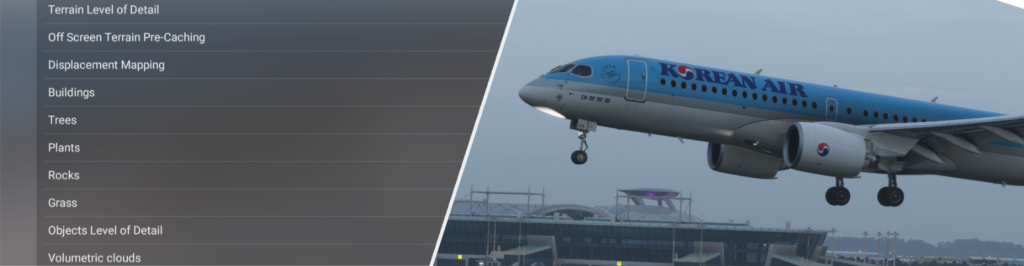
MSFS 2024 Settings Guide: How to Maximize Sim Performance
Anyone having spent more than a few hours in Microsoft Flight Simulator will know that getting the sim to run “just right” is somewhat of an undertaking that has led many an experienced simmer into depths of obsession if not outright despair. Flight simulators are, by nature, particularly resource …
기사 읽기
FSNews의 RSS 피드에서 제공한 콘텐츠이며, 기사가 축약되었을 수 있습니다.
FSNews에서 읽기Anyone having spent more than a few hours in Microsoft Flight Simulator will know that getting the sim to run “just right” is somewhat of an undertaking that has led many an experienced simmer into depths of obsession if not outright despair. Flight simulators are, by nature, particularly resource hungry applications: entirely flight-sim-dedicated computer builds aren’t at all unheard of.
-
Bob Dispatcher’s MSFS add-on manager returns with a major round of updates
When Bob Dispatcher arrived in June, it was a paid tool entering a room full of free ones. Our first look at Bob Dispatcher found a rich feature list and a version number of 1.0.x. The question at the time was whether one window for add-on management, GSX checks and cache cleanup could justify a pr…
기사 읽기
MSFS Addons의 RSS 피드에서 제공한 콘텐츠이며, 기사가 축약되었을 수 있습니다.
MSFS Addons에서 읽기When Bob Dispatcher arrived in June, it was a paid tool entering a room full of free ones. Our first look at Bob Dispatcher found a rich feature list and a version number of 1.0.x. The question at the time was whether one window for add-on management, GSX checks and cache cleanup could justify a price tag next to free options that already exist.
Five months later, the developer has shipped 17 stable releases since that earlier build. Versions 1.5 (October 11) and 1.6 (November 2) are where most of that work comes together. And according to the developer, almost all of it started with simmers using Bob and sharing what they wanted next, through Discord, bug reports, a beta channel and an anonymous feedback page inside the app.
Built around user feedback
Several of the changes since launch come straight from requests by early users. People with large collections asked for more room, so Bob now handles libraries of any size, World Map included. Others asked for a smoother activation process, and the developer says activation is now set and forget. Version 1.6 goes a step further and detects when a PC’s clock is wrong, a common cause of activation hiccups.
The first-run setup also got a lot of attention. Bob now shows where every add-on currently is and where it would go, explains why anything stays in place, and only moves files once you confirm. If you change your mind later, a “Move Everything Back” option returns everything to the Community folder, and the uninstaller offers the same.

Other requests made it in too, including setting the sim path by hand, changing the type of many add-ons at once, and loading flight plans without SimBrief.
Flight preparation, rebuilt around the map
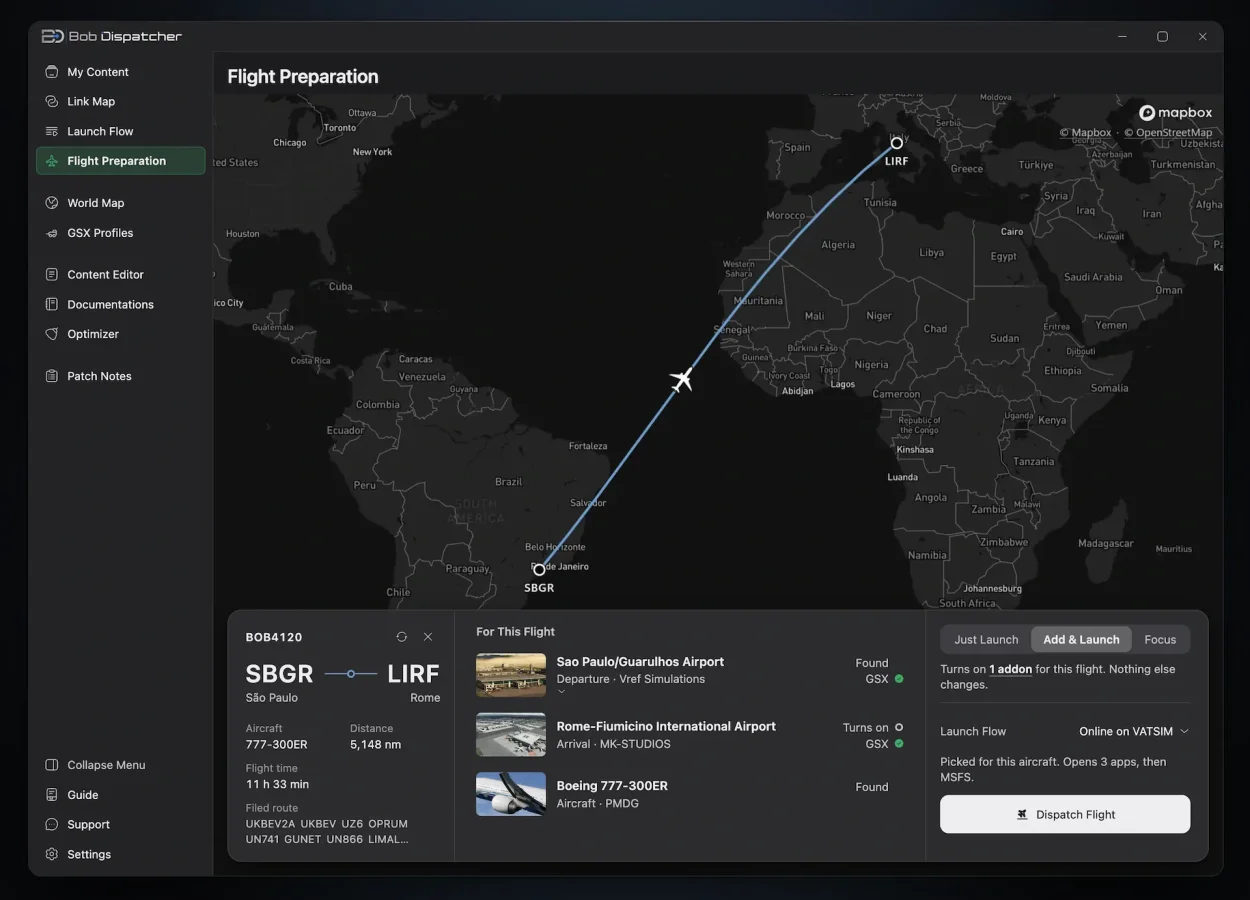
Flight preparation is still Bob’s main selling point, and version 1.4 rebuilt it from scratch. You can now search for airports by city, airport name, IATA or ICAO code, and the developer says small typos and missing accents still work. The aircraft field takes a model name like “737” or “king air.”
SimBrief is no longer required. Bob can open a .pln file from MSFS or a .lnmpln file from Little Navmap, which is a welcome addition for simmers who plan their flights elsewhere. A single card then lists every scenery and aircraft the flight needs. There are three modes: Just Launch, Add & Launch, which turns on what the flight needs, and Focus, which also turns off everything else. One Dispatch button then handles the add-ons, the companion apps and the sim itself.
Version 1.6 adds three useful changes:
- Alternate airport scenery. Bob now turns on scenery for your alternate airport too, taken from the SimBrief plan or the flight plan file.
- Three-character airport codes. Small airports with codes like S50 now work throughout the app, which helps US GA pilots.
- Sim selection. If you have both MSFS 2020 and 2024 installed, you can choose which one Bob starts.

Bob’s case for itself is the depth it now offers in route-aware activation, conditional links and GSX profile handling. A lot of that depth simply didn’t exist when we first looked at it.
The 1.6 notes end with a message from the developer. He writes that Bob’s growth has slowed, and that he will now work on other projects alongside Bob. Updates may come a little less often, but he says they will keep coming and that user feedback will continue to shape them. He’s counting on word of mouth from one simmer to another, which is how many small utilities usually find their audience.
Bob Dispatcher is available on SimMarket and the Flightsim.to Store, and it supports both MSFS 2024 and 2020. At the time of writing, SimMarket lists it at 50% off, €7.49 instead of €14.97. The full version history is on the Bob Dispatcher changelog.

-
Lunar AeroLabs pulls back the curtain on the LAGF800’s FMS, weeks after signing with Navigraph
Four weeks ago, Lunar AeroLabs was a name almost nobody in the community had heard. Since then, the studio behind the LAGF800 has kept up a steady weekly rhythm, and the last ten days or so continue to be busy. There was a Navigraph partnership, an official SimBrief profile, a long list of alpha ch…
기사 읽기
MSFS Addons의 RSS 피드에서 제공한 콘텐츠이며, 기사가 축약되었을 수 있습니다.
MSFS Addons에서 읽기Four weeks ago, Lunar AeroLabs was a name almost nobody in the community had heard. Since then, the studio behind the LAGF800 has kept up a steady weekly rhythm, and the last ten days or so continue to be busy. There was a Navigraph partnership, an official SimBrief profile, a long list of alpha changes, and today, a much closer look at the avionics that run the whole aircraft.
It’s an interesting momentum for a first-time developer whose release target is still close to a year away, and it comes during the same weeks that iniBuilds has been showing more of its own big-cabin jet, which makes the comparison hard to avoid.
If you’re just catching up, the LAGF800 is an ultra-long-range business jet for MSFS 2024 that looks a lot like Gulfstream’s G800. The developer says it’s an independent design, not licensed or endorsed by any manufacturer, and it runs on Working Title’s Epic 2 v2 avionics with a lot of custom pages and logic on top (we covered the reveal and the studio’s FAQ here). A week later, the studio opened the cockpit for the first time with a full power-up tour. The target hasn’t changed: Q3 2027, exclusively for MSFS 2024.
A closer look at the flight management system
Today’s update, posted on the developer’s Discord, is all about the displays. According to the studio, the FMS handles route sequencing, altitude and speed constraints and flight predictions, along with vertical planning data such as VNAV profiles, vertical speeds and flight path angles. Pilots will be able to switch between several data layouts for the active flight plan, depending on whether they want to see timings, winds and temperatures, fuel figures or coordinates.
Each waypoint also gets its own task menu. The developer lists direct-to, route amendments, holds, airway insertion and crossing constraints, and the screenshots show a few more options in there too, like vertical direct-to, intercept and RTA. A flight progress page brings together LNAV and VNAV data, air data and navigation accuracy figures.
The systems side gets attention as well. Lunar AeroLabs says the EICAS shows live engine indications, fuel quantities and hydraulic pressures, with selectable pages for flight controls, brakes, environmental systems, fuel and cameras. The brakes page, for example, displays pedal demand and brake temperatures.
Then there’s the arrival and landing interface on the touchscreen controller, which the developer says it’s particularly excited about. It brings together runway and landing performance information, VREF and approach speed calculations, landing configuration, autobrake selection, barometric minimums and altimeter settings, plus a step to confirm and dispatch the landing data.
The studio also goes out of its way to stress that none of this is static imagery or AI-generated graphics. It says the displays are software-driven, built with HTML, CSS and JavaScript, and work with real-time aircraft and flight management data. As always with in-development previews, the developer notes that everything shown remains subject to refinement.
Lunar AeroLabs is now also an official Navigraph partner. Alongside the news, the official LAGF800 SimBrief aircraft profile went live, which brings proper flight planning, fuel calculations and performance data for the jet.

What changed during alpha
The studio’s Sunday update on November 1 was the most detailed changelog we’ve had from Lunar AeroLabs so far, and a lot of it lines up with today’s screenshots.
On the touchscreen controller, the developer says it added MOD review with EXEC and Cancel MOD, secondary flight plans, saving and loading flight plans, direct-to, and support for airways, holds and crossing restrictions. The LNAV, VNAV, fuel and aircraft pages were expanded, and departure, approach and go-around speed schedules are now adjustable.
Handling and systems work included improved roll and pitch response, refined spoiler behavior, better climb and cruise scheduling, improved engine-out logic, a new in-flight relight capability, enhanced throttle calibration and improved reverse thrust. In the cabin, the galley, stairs and baggage areas were refined, and the studio added sounds for cabinets, drawers, appliances and water, reduced the battery-fan noise and integrated newly recorded audio. In its FAQ, the studio had said the sound package was recorded on a real ultra-long-range business jet, though the update doesn’t say more about the new recordings.
Alpha testing continues, and the current priorities are:
- Flight handling and flare characteristics
- Spoiler deployment and go-arounds
- Speed scheduling and throttle calibration
- Flight plan management
- HUD and EVS functionality
- VR usability
- Cabin interactions and night lighting

Ground vehicles and the full FBO experience
The other notable addition is on the ramp. The studio says its first set of ground vehicles is now implemented and fully working, and the ground power unit has been completed. One of today’s screenshots shows a ground services page in the SpeedPad EFB, where you pick two vehicles to bring passengers to the airstairs, with an optional red carpet arrival.
Lunar AeroLabs says its goal is a complete business aviation experience from engine start to shutdown. That’s an interesting parallel with iniBuilds, whose latest Global Jet teaser also put the cabin and FBO side front and center. It seems the ramp experience is becoming part of how these jets are being presented, not just the flight deck.
Still a long runway ahead
The usual caveats still apply. This is the studio’s first aircraft, it’s in alpha, and Q3 2027 is a long way off in MSFS terms. Lunar AeroLabs itself says there’s refining and testing ahead, and that it isn’t interested in rushing the aircraft out the door.
But if the pace of the last few weeks holds, there should be plenty more to look at before then.


-
Chudoba Design Releases Hurghada v2 for X-Plane 12
The developer Chudoba Design released a new YouTube video showing his upcoming Hurghada scenery for X-Plane 12. Not only does the airport receive an upgrade, but so does the surrounding area. The airport itself includes a reworked ground poly and an improved transparent terminal building. The surro…
기사 읽기
FSNews의 RSS 피드에서 제공한 콘텐츠이며, 기사가 축약되었을 수 있습니다.
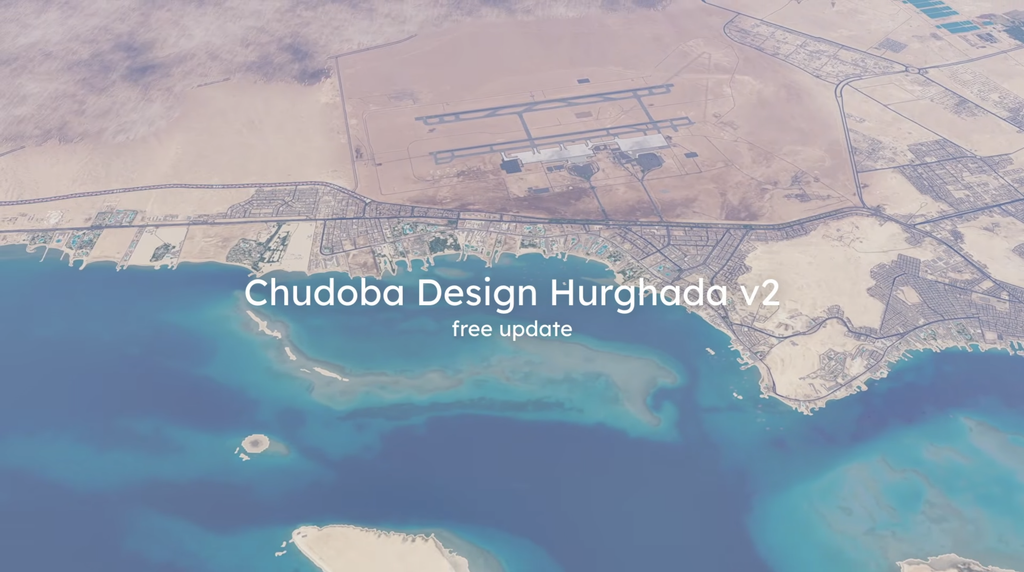
FSNews에서 읽기The developer Chudoba Design released a new YouTube video showing his upcoming Hurghada scenery for X-Plane 12. Not only does the airport receive an upgrade, but so does the surrounding area. The airport itself includes a reworked ground poly and an improved transparent terminal building. The surrounding area is the thing that got a massive upgrade in this scenery…
-
Flying Partners Slovakia Released Bratislava v2 for MSFS
Slovak developer Flying Partners Slovakia released their second rendition of Bratislava M.R. Štefánik Airport (LZIB) for Microsoft Flight Simulator 2020 and 2024. The scenery was teased in a trailer approximately a month ago and has been available for purchase since November 1st. The scenery includ…
기사 읽기
FSNews의 RSS 피드에서 제공한 콘텐츠이며, 기사가 축약되었을 수 있습니다.
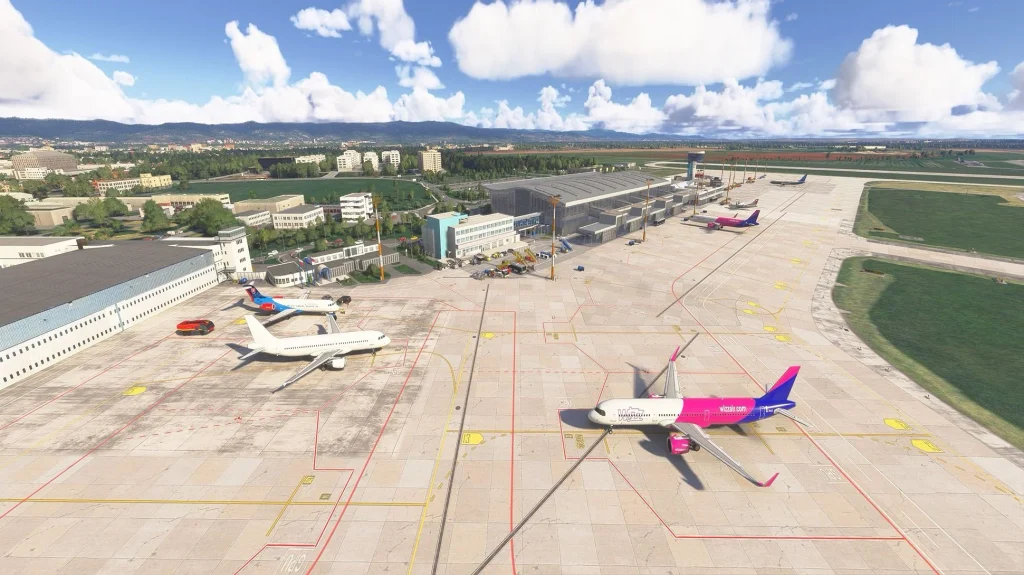
FSNews에서 읽기Slovak developer Flying Partners Slovakia released their second rendition of Bratislava M.R. Štefánik Airport (LZIB) for Microsoft Flight Simulator 2020 and 2024. The scenery was teased in a trailer approximately a month ago and has been available for purchase since November 1st. The scenery includes the most accurate information about the airport from July of this year…
소식 출처
각 매체의 RSS 피드에서 제공하는 소식을 정기적으로 갱신합니다. 기사 전문은 각 매체의 웹사이트에서 확인할 수 있습니다.